





Titanium Dioxide Powder: Properties, Applications, and Future Prospects
Physical and Chemical Properties of Titanium Dioxide Powder
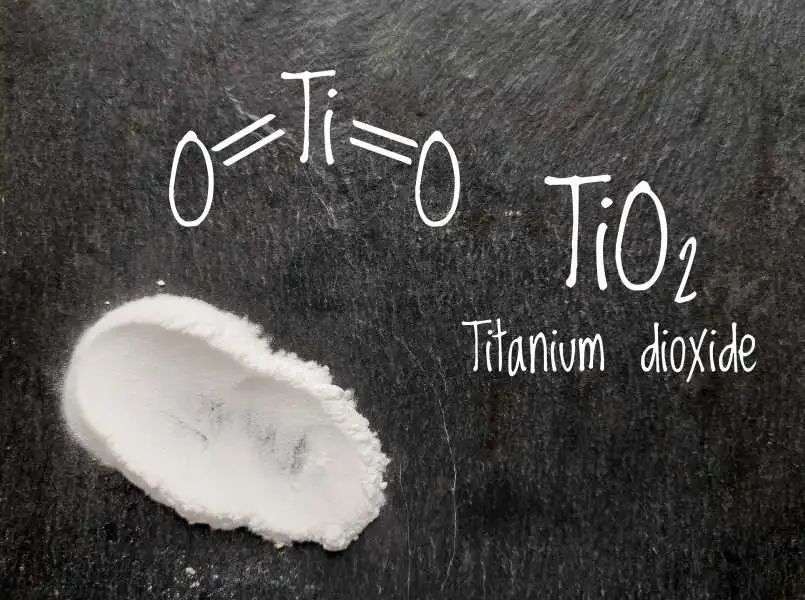
TiO₂ powder exhibits unique properties that underpin its broad utility. Structurally, it exists in three primary crystalline phases: anatase, rutile, and brookite. Among these, anatase and rutile are the most commercially relevant, while brookite is relatively rare and less utilized due to its instability under standard conditions. Rutile, the most thermodynamically stable phase, boasts a high refractive index (approximately 2.71) and excellent UV resistance, making it ideal for applications requiring durability and optical performance. Anatase, though less stable, exhibits superior photocatalytic activity, a trait that has driven its use in environmental and energy-related technologies.
Chemically, TiO₂ powder is highly inert, resisting corrosion by acids, bases, and most organic solvents. This stability ensures its longevity in harsh environments, such as outdoor coatings exposed to rain and sunlight. It also has a high melting point (around 1,843°C) and low volatility, further enhancing its suitability for high-temperature applications. Optically, TiO₂ powder is renowned for its exceptional whiteness and opacity, attributed to its high light-scattering ability. With a reflectance of over 95% in the visible spectrum, it is widely used as a Whitening agent and opacifier in paints, plastics, and paper.
Applications of Titanium Dioxide Powder
TiO₂ powder’s diverse properties have led to its adoption in a wide range of industries, spanning consumer products, industrial materials, and cutting-edge technologies.
Coatings and PaintsThe largest application of TiO₂ powder is in the coatings and paints industry, where it serves as a key pigment and opacifier. Its high refractive index and light-scattering ability provide excellent hiding power, ensuring that paints cover surfaces evenly and maintain their color over time. Rutile TiO₂ is particularly preferred in exterior paints due to its UV resistance, which prevents the paint from fading or deteriorating under sunlight. Additionally, TiO₂ powder enhances the durability and corrosion resistance of coatings, making them suitable for use on metal structures, automobiles, and buildings. |  |
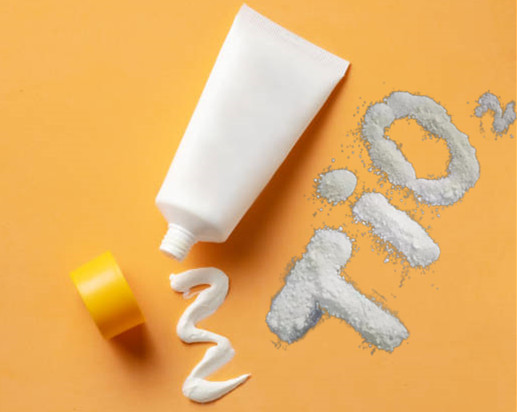 | Cosmetics and SunscreensIn the cosmetics industry, TiO₂ powder is widely used as a whitening agent in foundations, powders, and creams, leveraging its high whiteness and inertness to avoid skin irritation. It is also a critical component in sunscreens, where it acts as a physical UV filter. Unlike chemical UV filters, which absorb UV radiation, TiO₂ powder scatters and reflects both UVA (320–400 nm) and UVB (280–320 nm) rays, providing broad-spectrum protection. Nanoscale TiO₂ powder is often used in sunscreens to improve transparency, preventing the white cast associated with larger particles while maintaining effective UV protection. |
Environmental RemediationThe photocatalytic activity of anatase TiO₂ powder has made it a promising material for environmental remediation. When irradiated with UV light, TiO₂ particles generate electron-hole pairs that react with water and oxygen to produce reactive oxygen species (ROS), such as hydroxyl radicals (•OH) and superoxide ions (O₂•⁻). These ROS are highly reactive and can degrade organic pollutants, such as dyes, pesticides, and volatile organic compounds (VOCs), into harmless substances like carbon dioxide and water. TiO₂ powder is used in wastewater treatment systems, air purifiers, and self-cleaning surfaces (e.g., glass, tiles) that break down dirt and organic matter when exposed to sunlight. | 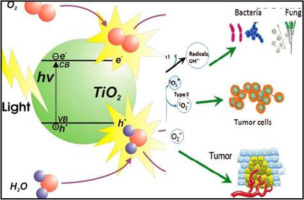 |
| | Biomedical ApplicationsRecent advances have expanded the use of TiO₂ powder in biomedical fields. Nanoscale TiO₂ powder, with its high surface area and biocompatibility, is used as a drug delivery system, enabling the targeted release of pharmaceuticals to specific tissues. It also exhibits antibacterial activity, attributed to its photocatalytic generation of ROS, which damage bacterial cell membranes. This property has led to its incorporation into medical devices, such as catheters and wound dressings, to prevent infections. Additionally, TiO₂ powder is being explored in tissue engineering as a scaffold material, supporting cell growth and differentiation. |

Safety and Environmental Considerations
While TiO₂ powder offers numerous benefits, its safety and environmental impact have become subjects of increasing concern, particularly regarding nanoscale particles.
- Human Health Risks
Inhalation of TiO₂ powder, especially nanoscale particles, has been linked to potential respiratory risks. Studies have shown that high concentrations of TiO₂ nanoparticles can accumulate in the lungs, causing inflammation and oxidative stress. However, the risk varies depending on particle size, concentration, and exposure duration. For most consumer products, such as cosmetics and sunscreens, the risk of inhalation is low, as the particles are either encapsulated or applied topically. The European Union has classified nanoscale TiO₂ as a “substance of very high concern” (SVHC) due to potential genotoxicity, leading to restrictions on its use in certain products. Other regions, such as the United States, have not yet imposed similar restrictions but continue to monitor research on its health effects.
- Environmental Impact
TiO₂ powder can enter the environment through wastewater discharge (from industrial processes and consumer product use) and atmospheric deposition. In aquatic environments, TiO₂ nanoparticles may accumulate in sediment and biota, potentially affecting aquatic organisms. Studies have shown that high concentrations of TiO₂ nanoparticles can inhibit the growth of algae and disrupt the reproductive systems of fish. However, the environmental impact is influenced by factors such as particle size, concentration, and water chemistry (e.g., pH, organic matter content), which affect their bioavailability and toxicity. To mitigate these risks, researchers are developing strategies to reduce TiO₂ release, such as improving wastewater treatment processes and designing biodegradable TiO₂-based materials.
Future Prospects
The future of TiO₂ powder lies in the development of advanced materials with enhanced properties and reduced environmental and health impacts. One key area of research is the modification of TiO₂ powder to extend its photocatalytic activity to the visible light spectrum. By doping TiO₂ with elements such as nitrogen, carbon, or transition metals, researchers can shift its bandgap, enabling it to utilize sunlight more efficiently for applications like solar energy conversion (e.g., solar cells) and environmental remediation.
Another promising direction is the development of green synthesis methods to reduce the environmental footprint of TiO₂ production. For example, researchers are exploring the use of renewable resources (e.g., plant extracts) as reducing agents in sol-gel synthesis, eliminating the need for toxic chemicals. Additionally, the recycling of TiO₂-containing waste, such as used paints and plastics, could reduce reliance on virgin raw materials and minimize waste generation.
In the biomedical field, the design of targeted TiO₂-based drug delivery systems and antibacterial materials holds great potential for improving disease treatment and infection prevention. Researchers are also investigating the use of TiO₂ powder in regenerative medicine, such as bone tissue engineering, where its biocompatibility and mechanical properties can support tissue growth.
Furthermore, the integration of TiO₂ powder into smart materials is an emerging trend. For instance, self-healing coatings containing TiO₂ can repair cracks when exposed to sunlight, extending the lifespan of structures. TiO₂-based sensors are also being developed for detecting pollutants and biomolecules, offering high sensitivity and selectivity.
Conclusion
Titanium dioxide powder is a versatile material with a wide range of applications, driven by its exceptional optical, chemical, and physical properties. While its industrial production and use present challenges related to safety and the environment, ongoing research and technological advancements are addressing these issues. By developing modified TiO₂ materials, green synthesis methods, and innovative applications, the potential of TiO₂ powder to contribute to sustainable development—from clean energy to environmental protection and healthcare—remains vast. As research continues, TiO₂ powder is poised to play an even more significant role in shaping the technologies of the future.
We’re here to help! If you have any questions after reading this article, please contact us.