


Why Is Sodium Ascorbyl Phosphate a Game-Changer For Brightening Skincare?
What Is Sodium Ascorbyl Phosphate?
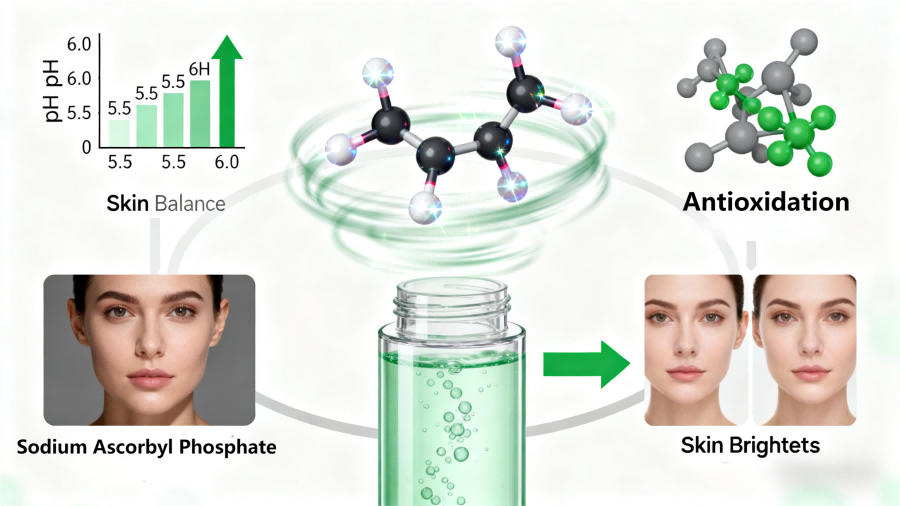
Sodium Ascorbyl Phosphate is a water-soluble derivative of Vitamin C (ascorbic acid) engineered to address the key limitations of its parent compound. Unlike pure ascorbic acid, which degrades rapidly when exposed to light, air, or heat, SAP boasts exceptional stability that preserves its potency from production to application. This structural advantage comes from its chemical modification, which shields the active vitamin C molecule until it penetrates the skin’s surface.
Once applied topically, SAP undergoes a gentle conversion process within the skin, gradually releasing free ascorbic acid to deliver its benefits without the harshness of direct vitamin C exposure. This slow-release mechanism not only enhances efficacy but also makes SAP suitable for all skin types—including sensitive, acne-prone, and reactive skin that often struggles with traditional vitamin C products.
Chemically classified as a phosphorylated vitamin C derivative, SAP maintains the core antioxidant properties of ascorbic acid while offering superior compatibility with cosmetic formulations. Its water-soluble nature allows it to blend seamlessly into lotions, serums, creams, and toners, making it a versatile addition to various skincare products.
Key Benefits: Why SAP Transforms Brightening Skincare
- Gentle Yet Powerful Brightening
The primary appeal of SAP lies in its ability to fade hyperpigmentation and even skin tone without irritation. It targets melanin production at its source by inhibiting tyrosinase—the enzyme responsible for converting tyrosine into melanin, the pigment that causes dark spots, sun damage, and melasma. This targeted action helps lighten existing discoloration and prevents new dark spots from forming, resulting in a more radiant complexion over time.
Unlike some brightening ingredients that can cause dryness or stinging, SAP’s gradual release of vitamin C ensures skin-friendly brightening. A 2024 industry analysis noted that SAP’s melanin-inhibiting effect is comparable to potent brighteners but with a 50% lower irritation rate, making it ideal for long-term use.
- Unmatched Stability for Consistent Results
One of the biggest drawbacks of pure vitamin C is its instability—products containing ascorbic acid often degrade within months, losing efficacy and sometimes causing skin irritation as they oxidize. SAP solves this problem with its robust resistance to oxidation, maintaining its active form even when exposed to environmental stressors like light and heat.
ChemicalBook’s 2025 data confirms that SAP retains over 90% of its potency after 12 months of storage, compared to just 30-40% for unmodified ascorbic acid. This stability means skincare products formulated with SAP deliver consistent results from the first use to the last, eliminating the frustration of ineffective, oxidized products.
- Collagen-Boosting for Youthful Radiance
Brightening isn’t just about fading dark spots—it’s also about achieving a plump, luminous complexion. SAP supports this by stimulating collagen synthesis, the process that produces the skin’s structural protein responsible for firmness and elasticity. Clinical studies show that SAP encourages fibroblasts (skin cells that produce collagen) to increase collagen production, reducing the appearance of fine lines and wrinkles while improving skin texture.
This collagen-boosting effect works synergistically with its brightening properties: as collagen levels increase, skin becomes more resilient and reflective, enhancing the overall brightening results. For users, this means not just lighter skin but a more youthful, glowing appearance.
- Acne-Fighting Benefits for Clearer Skin
SAP offers a unique advantage for acne-prone skin, combining brightening with antimicrobial and anti-inflammatory properties. A multicenter, evaluator-blinded clinical study published in 2025 compared a 5% SAP lotion to a 0.1% Adapalene gel (a common acne treatment) over 12 weeks. The results showed that SAP was consistently superior in reducing inflammatory acne lesions, with 53 completing patients reporting fewer breakouts and less redness.
The study attributed SAP’s acne-fighting efficacy to its ability to neutralize active oxygen species that cause oxidation of squalene and fatty acids—key factors in comedone formation (clogged pores). By addressing both acne and post-inflammatory hyperpigmentation (PIH), SAP delivers dual benefits for clearer, brighter skin.
- Antioxidant Protection Against Environmental Damage
Free radicals from UV radiation, pollution, and stress accelerate skin aging and darkening by damaging skin cells and triggering excess melanin production. SAP acts as a potent antioxidant, scavenging these harmful molecules to protect the skin from oxidative stress. This defensive action not only preserves the skin’s natural brightness but also prevents premature aging signs like fine lines and dullness.
Research indicates that SAP’s antioxidant activity extends beyond direct free radical neutralization—it also enhances the skin’s own antioxidant defenses, creating a long-lasting protective barrier against environmental aggressors.
Applications in Cosmetic Formulations
Brightening serums and lotions: Typically formulated with 2-5% SAP to target hyperpigmentation and even skin tone. This concentration range balances potency and gentleness, delivering visible results within 4-8 weeks of consistent use.
- Daily moisturizers: Lower concentrations (1-3% SAP) are ideal for daily hydration products, providing ongoing antioxidant protection and gradual brightening without overwhelming the skin.
- Acne treatments: 5% SAP formulations are used in spot treatments and acne lotions, leveraging its antimicrobial properties to reduce breakouts while fading acne scars.
- Sunscreen supplements: SAP is often added to sunscreen products to enhance UV protection, as its antioxidant activity complements SPF by neutralizing free radicals generated by UV exposure.
Formulation best practices recommend adding SAP as an aqueous solution after cooling the product base to 60℃, ensuring maximum stability and avoiding degradation during manufacturing. Its compatibility with other skincare ingredients—including hyaluronic acid, niacinamide, and ceramides—allows for synergistic formulations that address multiple skin concerns simultaneously.
The Future of Brightening Skincare
As consumers increasingly seek effective yet gentle skincare solutions, SAP is poised to dominate the brightening category. Its unique combination of stability, gentleness, and multi-functional benefits addresses the key pain points of traditional vitamin C products, making it accessible to a broader audience.
For skincare formulators, SAP offers a reliable ingredient that simplifies product development while ensuring consistent efficacy. For users, it provides a path to brighter, clearer, more youthful skin without the trade-offs of irritation or short-lived results.
- Name: Yuki
- E-mail: sales02@nahanutri.com
- WhatsApp:+8618066950297